 Start Service Request

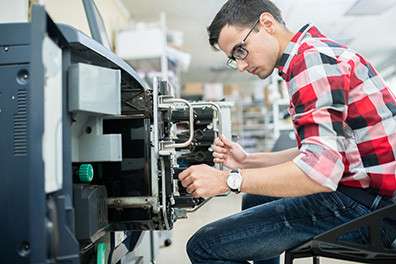
Office equipment breaks. Always at the worst possible time.
The copier dies hours before a major proposal deadline. The network printer fails during month-end reporting. The wide format plotter stops working when construction documents need printing for tomorrow's permit submission.
These crises share a common origin: reactive maintenance approaches that wait for failures before taking action. The alternative—preventive maintenance—addresses problems before they cause operational disruptions, but requires investment and discipline that many organizations struggle to justify until after experiencing costly breakdowns.
What Is Reactive Maintenance?
Reactive maintenance means fixing equipment after it breaks. The approach is simple: use equipment until it fails, then repair or replace it.
Also called "run-to-failure" maintenance, this strategy dominates how most businesses handle office equipment. Copiers run until they stop working. Printers operate until output quality becomes unacceptable. Scanners function until paper jams become constant frustrations.
The logic seems sound. Why spend money maintaining equipment that's working fine? Why schedule service appointments when nothing appears broken? Why invest in preventive tasks when failures might never occur?
That reasoning collapses when factoring in failure consequences. A $200 service call preventing a breakdown costs far less than the $2,000 in lost productivity when equipment fails during critical operations. Reactive maintenance optimizes for short-term expense minimization while ignoring long-term total costs.
What Is Preventive Maintenance?
Preventive maintenance performs scheduled service tasks before problems occur, maintaining equipment in optimal condition and preventing failures.
Manufacturers design office equipment expecting regular maintenance. Print heads need cleaning. Feed rollers require replacement. Imaging components wear gradually and need scheduled service. Firmware updates patch security vulnerabilities and improve performance.
Preventive programs execute these tasks on schedules based on usage intervals, calendar periods, or manufacturer recommendations—whichever arrives first. A copier might receive quarterly service regardless of page count, or after every 50,000 pages regardless of calendar time.
The investment happens continuously in small increments rather than sporadically in large emergency expenses. Organizations budget predictable monthly maintenance costs instead of facing unpredictable repair bills when equipment fails at inconvenient moments.
How Do Preventive and Reactive Maintenance Compare?
The fundamental difference isn't just timing—it's philosophy about equipment reliability and operational risk.
Reactive maintenance accepts equipment failure as inevitable and addresses problems as they occur. A copier breaking down represents an expected event requiring rapid response. The focus is minimizing repair costs and restoration time after failures happen.
Preventive maintenance treats equipment failure as largely preventable through proper care. Regular service keeps equipment operating reliably. The focus shifts from crisis response to systematic care preventing most failures from occurring.
Cost Structures
Reactive maintenance appears cheaper initially. No scheduled service appointments mean no regular service fees. Expenses occur only when equipment actually needs repair. For lightly-used equipment that rarely fails, this approach can indeed cost less.
Preventive maintenance requires consistent investment regardless of whether problems would have occurred. Monthly or quarterly service fees add up. Consumable parts get replaced on schedules, not only when they fail. This predictable expense stream costs more upfront than reactive approaches—until factoring in breakdown consequences.
Downtime Impact
Equipment failures don't schedule themselves conveniently. Copiers break during proposal deadlines. Printers fail during financial closes. Scanners malfunction when processing time-sensitive documents.
Reactive maintenance accepts this disruption as unavoidable cost of operations. Rapid response minimizes downtime but cannot eliminate it. Even with same-day service, equipment sits broken for hours or days.
Preventive maintenance dramatically reduces unexpected failures. Regular service catches developing problems before they cause breakdowns. Equipment rarely fails because maintenance addresses wear before it creates failures. Scheduled service happens during planned downtime rather than whenever failures strike.
Equipment Lifespan
Office equipment operated without preventive maintenance wears faster and fails sooner. Dirty sensors cause misfeeds that stress paper paths. Worn rollers damage paper and strain motors. Neglected cleaning allows dust accumulation degrading performance.
Well-maintained equipment lasts years longer than neglected devices. A copier receiving regular service might operate reliably for seven years. The same model without maintenance often requires replacement after four years due to accumulated wear and component failures.
Longer lifespan spreads equipment investment across more years, reducing annual ownership costs despite higher maintenance expenses.
What Are the True Costs of Each Approach?
Comparing maintenance strategies requires calculating total costs, not just direct service expenses.
Reactive Maintenance Costs
Emergency repair fees typically run 50-100% higher than scheduled service. Technicians responding to urgent breakdowns charge premium rates for priority response. After-hours failures command even higher emergency service fees.
Productivity losses multiply direct repair costs significantly. Ten employees unable to work for four hours waiting for copier repairs represents 40 lost work hours. At $50 per hour average labor cost, that single breakdown costs $2,000 in lost productivity—far exceeding the repair bill.
Rushed replacement decisions made during crises often cost more than planned equipment purchases. When critical equipment fails completely, organizations pay premium prices for expedited delivery rather than negotiating favorable terms during planned procurement.
Shorter equipment lifespan from neglected maintenance increases annual ownership costs. Replacing equipment every four years instead of every seven years raises annual depreciation by 75%.
Preventive Maintenance Costs
Scheduled service contracts typically cost $50-200 monthly for office equipment depending on device type and coverage level. Annual costs run $600-2,400 per device.
Parts replaced proactively before failure cost the same as reactive replacement but installation happens during scheduled service rather than emergency calls, avoiding premium labor charges.
Time investment for scheduled maintenance is minimal. Technicians arrive during planned service windows. Equipment downtime gets scheduled during low-activity periods. Operations continue without crisis response disruption.
The math tilts heavily toward preventive approaches when calculating total ownership costs. Higher predictable maintenance expenses prove far cheaper than unpredictable crisis costs when factoring productivity losses and shortened equipment life.
What Preventive Maintenance Tasks Apply to Office Equipment?
Different equipment types require specific maintenance tasks, but common patterns apply across categories.
Cleaning and Inspection
Dust and debris accumulate inside office equipment, causing multiple problems. Dirty sensors misread paper position, causing jams. Contaminated optics degrade scan and copy quality. Dusty electronics overheat and fail prematurely.
Regular cleaning involves compressed air removing dust buildup, cleaning cloths wiping sensors and optics, and inspection identifying developing issues before they cause failures. Monthly cleaning prevents most contamination problems.
Component Replacement
Office equipment includes consumable components wearing through normal use and requiring periodic replacement:
- Feed rollers lose grip after hundreds of thousands of pages, causing misfeeds
- Separation pads wear smooth, allowing multiple sheets to feed simultaneously
- Fuser assemblies degrade from extreme heat cycles, affecting image quality
- Transfer belts wear gradually, creating streaks and quality issues
- Print heads clog or fail after millions of actuations
Manufacturers specify replacement intervals based on usage. A printer might need feed roller replacement every 100,000 pages. Waiting until complete failure damages downstream components and creates bigger problems.
Calibration and Adjustment
Office equipment drifts from optimal settings through normal use. Color accuracy shifts. Registration alignment degrades. Paper feed timing requires adjustment.
Preventive calibration maintains output quality and operational reliability. Color devices need regular color calibration ensuring consistent output. Scanning equipment requires periodic alignment adjusting image capture accuracy. These adjustments prevent quality degradation that develops gradually.
Firmware and Software Updates
Manufacturers release firmware updates addressing security vulnerabilities, fixing bugs, and improving performance. Equipment running outdated firmware faces security risks and misses performance improvements.
Scheduled update application during maintenance visits ensures equipment remains current. Delaying updates until problems occur leaves equipment vulnerable and creates compatibility issues with evolving business systems.
Lubrication and Mechanical Service
Moving parts require periodic lubrication to maintain smooth operation. Paper paths include numerous mechanical components needing proper lubrication. Without it, friction increases, noise develops, and components wear faster.
Preventive lubrication extends mechanical component life and maintains quiet operation. Reactive approaches wait until excessive noise or mechanical failures force service—after damage has occurred.
How Do You Build a Preventive Maintenance Program?
Transitioning from reactive firefighting to systematic preventive maintenance requires planning and commitment.
- Step 1: Inventory your equipment
Document every device requiring maintenance—make, model, serial number, age, and current usage. This inventory becomes the foundation for scheduling and tracking maintenance activities. - Step 2: Determine maintenance requirements
Consult manufacturer recommendations for each device. Service manuals specify maintenance intervals and required tasks. If documentation isn't available, contact manufacturers or service providers for guidance. - Step 3: Establish service schedules
Create maintenance calendars based on usage intervals or calendar periods, whichever arrives first. A copier might need service every 50,000 pages or quarterly—whichever comes first ensures service happens appropriately. - Step 4: Select service providers
Decide whether internal staff will perform maintenance or if external service providers make more sense. Complex equipment typically requires certified technician expertise. Basic cleaning and simple tasks might happen internally. - Step 5: Budget for maintenance
Calculate annual maintenance costs across all equipment. Include service contract fees, replacement parts, and internal labor if applicable. This budgeting transforms unpredictable repair expenses into manageable planned costs. - Step 6: Track and adjust
Monitor equipment performance and maintenance effectiveness. Are failures still occurring despite preventive service? Increase service frequency. Is equipment performing flawlessly with minimal intervention? Adjust schedules as actual experience dictates.
What Equipment Benefits Most from Preventive Maintenance?
Not all office equipment justifies equal preventive maintenance investment. Strategic prioritization focuses resources where they deliver maximum value.
High-Volume Production Equipment
Copiers processing 50,000+ pages monthly need rigorous preventive maintenance. Heavy use accelerates wear. Component failures disrupt operations significantly. Regular service prevents breakdowns that would halt productivity for entire departments.
Production printers, high-speed scanners, and multifunction devices serving workgroups similarly warrant comprehensive preventive programs. Usage intensity and operational criticality justify maintenance investment.
Mission-Critical Devices
Equipment supporting essential business functions deserves preventive attention regardless of usage volume. A law firm's scanning system processing court filings cannot fail during filing deadlines. A healthcare facility's patient label printer needs absolute reliability.
Criticality sometimes outweighs utilization when determining maintenance priorities. Lightly-used but essential equipment still needs preventive service ensuring availability when needed.
Expensive Equipment
High-value devices justify preventive maintenance protecting capital investment. A $30,000 production copier or $15,000 wide format printer represents substantial investment worth protecting through proper care.
Reactive approaches risk premature failure of expensive equipment, requiring earlier replacement than preventive maintenance would have necessitated. The cost of extending equipment life through maintenance remains far less than early replacement costs.
Networked and Integrated Systems
Equipment integrated into critical business workflows needs reliability maintenance delivers. Document management systems, automated invoice processing, and integrated workflow tools depend on scanning and printing equipment functioning consistently.
Failure of integrated equipment disrupts entire processes, not just individual tasks. Preventive maintenance prevents these cascade failures affecting multiple systems and workflows.
When Does Reactive Maintenance Make Sense?
Preventive maintenance isn't universally optimal. Some situations favor reactive approaches.
Low-utilization equipment used occasionally might not justify preventive service costs. A badge printer used twice yearly for events doesn't need quarterly service. Addressing problems when they occur costs less than maintaining rarely-used equipment preventively.
Inexpensive devices where replacement costs less than maintenance similarly favor reactive approaches. A $200 desktop printer might be cheaper to replace when it fails than maintaining preventively. Disposal and replacement costs less than annual service contracts.
Equipment nearing replacement doesn't warrant significant preventive investment. If you're planning to replace a copier in six months, comprehensive preventive maintenance makes little sense. Basic care maintaining functionality until replacement arrives suffices.
Backup equipment providing redundancy can operate reactively. If you maintain duplicate devices for failover, running one reactively while maintaining the other preventively balances costs against availability requirements.
The key is strategic choice, not blanket policies. Evaluate each device individually based on criticality, utilization, value, and operational context.
How to Transition from Reactive to Preventive Maintenance
Organizations accustomed to reactive approaches face cultural and operational challenges adopting preventive strategies.
Start with Critical Equipment
Don't attempt comprehensive programs immediately. Begin with highest-priority devices—mission-critical equipment, high-volume devices, or expensive systems. Success with initial equipment builds momentum and demonstrates value justifying broader implementation.
Establish Baseline Performance
Document current failure rates, repair costs, and downtime before implementing preventive maintenance. This baseline enables measuring improvement and demonstrating program value.
After six months of preventive service, comparing failure frequency and costs against baseline quantifies benefits. These metrics justify program expansion and continued investment.
Build Internal Support
Preventive maintenance requires ongoing commitment from leadership and budget owners. Demonstrate how prevention reduces total costs despite higher predictable expenses. Show how reliability improvements affect productivity and customer service.
Cost comparisons between crisis repairs and scheduled maintenance usually convince skeptics. One avoided major breakdown often pays for months of preventive service.
Partner with Quality Service Providers
Reliable service providers make or break preventive programs. Providers who miss scheduled appointments, provide poor service quality, or charge excessive fees undermine confidence in preventive approaches.
Local providers with strong reputations, rapid response capabilities, and extensive parts inventory deliver the reliability preventive programs require. Established relationships with trusted providers enable long-term program success.
Monitor and Communicate Results
Track program metrics—failure rates, repair costs, downtime hours, and service expenses. Regular reporting demonstrates value and maintains organizational commitment.
Sharing success stories reinforces program benefits. When preventive service catches a developing problem before it causes failure, communicate that success. When equipment operates reliably without unexpected breakdowns, attribute that reliability to maintenance programs.
Making the Strategic Maintenance Decision
The choice between preventive maintenance vs. reactive maintenance isn't binary. Effective strategies blend both approaches based on equipment characteristics and business requirements.
Critical, high-value, heavily-used equipment almost always justifies preventive investment. The costs of failures far exceed preventive service expenses. Reliability requirements demand proactive care.
Less critical, inexpensive, lightly-used equipment can operate reactively without significant risk. Addressing problems when they occur costs less than maintaining equipment that might never fail.
Most organizations benefit from hybrid approaches: comprehensive preventive programs for essential equipment, reactive strategies for peripheral devices, and intermediate approaches for equipment falling between extremes.
The worst approach is unconscious reactive maintenance where organizations simply haven't considered preventive alternatives. Intentional strategy—whatever approach chosen—beats default behavior lacking analysis or planning.
Preventive Maintenance Expertise for Oklahoma Businesses
JD Young Technologies has helped Oklahoma organizations develop effective equipment maintenance strategies for over 75 years. We understand that preventive maintenance vs reactive maintenance decisions require careful analysis of equipment criticality, usage patterns, and total cost implications.
Our approach starts with an honest assessment of your specific situation. Not every device justifies comprehensive preventive service. We help identify which equipment benefits from proactive maintenance and which can operate reactively without significant risk.
Our preventive maintenance programs include:
- Scheduled service based on manufacturer specifications and equipment usage
- Comprehensive cleaning, inspection, and adjustment procedures
- Proactive component replacement before failures occur
- Firmware updates and security patch application
- Detailed service documentation tracking maintenance history
- Performance monitoring identifying developing issues
We serve businesses, educational institutions, healthcare organizations, and government agencies throughout Oklahoma with maintenance programs tailored to operational requirements and budget constraints.
Our certified technicians maintain extensive parts inventory enabling efficient service during scheduled appointments. Our 99% same-day turnaround rate on service calls ensures even our preventive maintenance customers receive rapid response on the rare occasions when unexpected issues occur.
For organizations currently operating reactive maintenance programs and experiencing frustration with unexpected failures and disrupted operations, we provide complimentary equipment assessments. This analysis compares your current failure costs and downtime against preventive program expenses, quantifying the financial impact of different maintenance approaches.
We also offer hybrid programs combining comprehensive preventive service for critical equipment with cost-effective reactive support for peripheral devices—optimizing maintenance investment across your complete equipment fleet.
Contact JD Young Technologies to discuss your office equipment maintenance requirements. Our 75 years serving Oklahoma businesses has taught us that effective maintenance strategies come from understanding your specific operational needs and constraints—then implementing programs delivering reliability improvements at justified costs. We'll help you determine whether preventive maintenance, reactive maintenance, or strategic combinations best serve your organization.